Dispatch Planning
Jobs, routes and driver assignment planned around your actual daily load, not a fixed template.
A logistics app is only as good as the status it reports. If a driver marks a delivery complete but the customer still calls asking where their shipment is, the app has already failed. We build dispatch, driver and tracking tools that keep shipment status accurate from pickup to final delivery, not just visually polished.
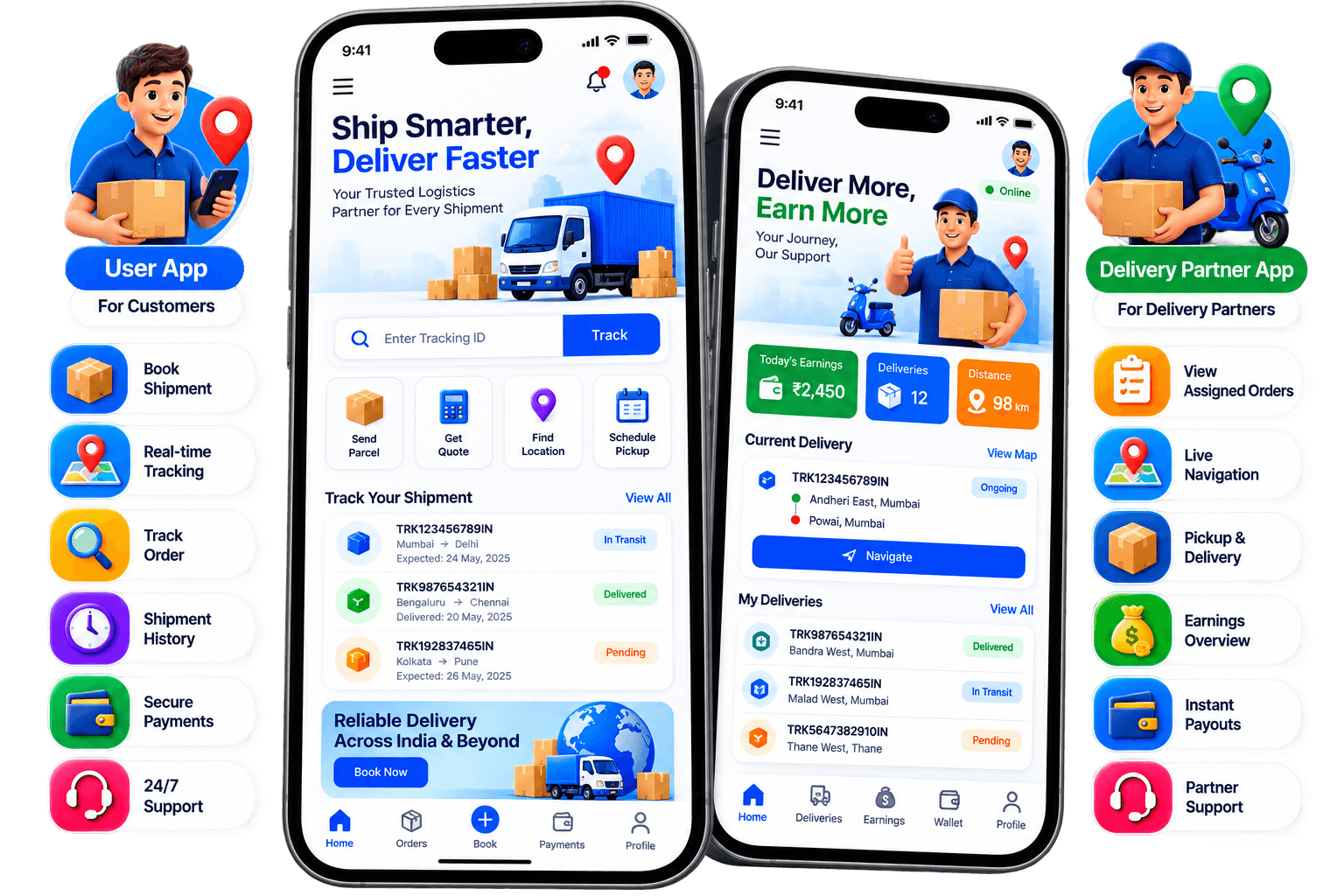
A tracking label means little when dispatch, pickup and delivery teams interpret status differently from each other. We start by defining each operational milestone - who records it, what evidence is required, and when that update actually reaches the customer or manager.
Driver workflows have to work on the road, not just in a demo. That means planning for weak network connectivity, wrong addresses and failed delivery attempts. Dispatchers need their own view for assignments, delays and exceptions - without relying on phone calls and scattered WhatsApp messages.
Maps, barcode scanning, proof-of-delivery records and transport systems get integrated only where reliable access actually exists. The goal is one accountable flow of shipment information from booking through final delivery, not five disconnected screens that all claim to show status.
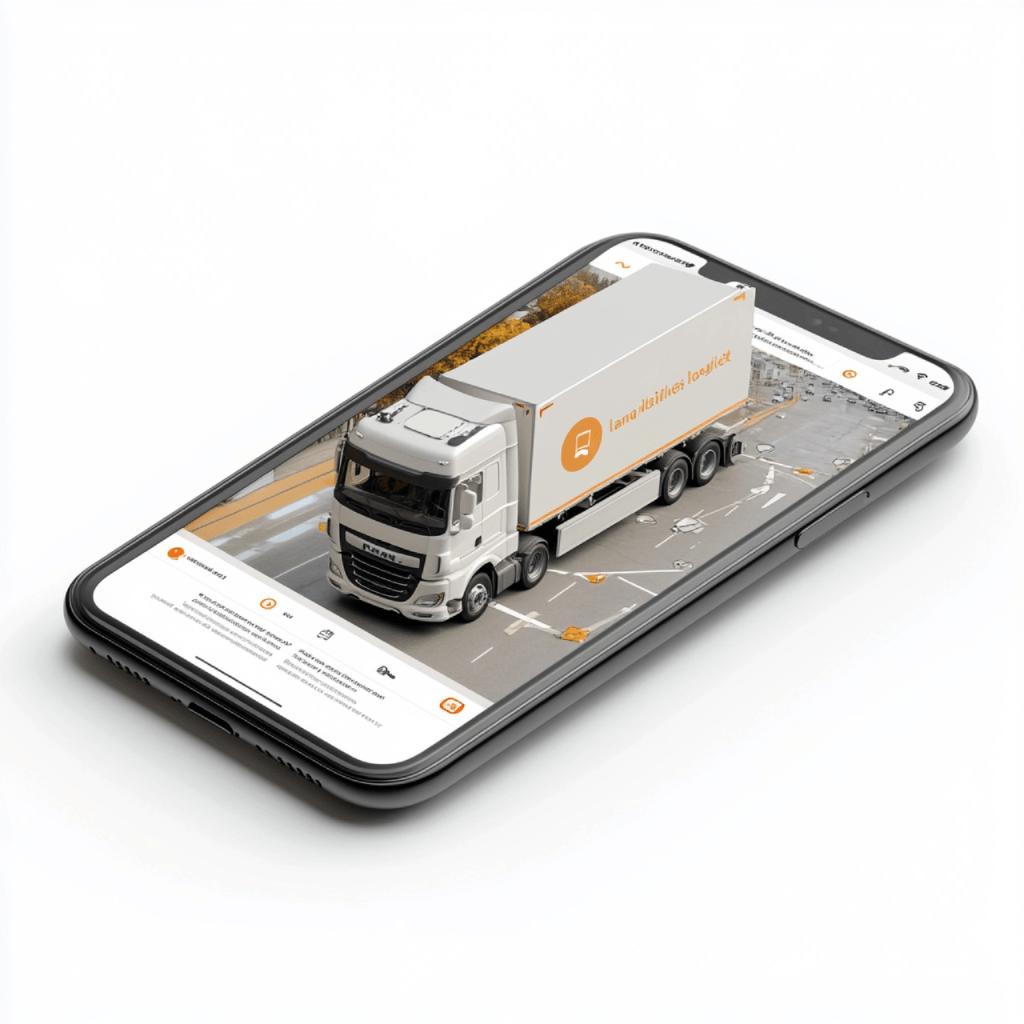
The scope connects customer experience, operational control and dependable technology - the app is not treated as a set of isolated screens.
Jobs, routes and driver assignment planned around your actual daily load, not a fixed template.
Pickup, transit and delivery actions captured directly from the driver app, with offline support for weak network areas.
Signatures, photos and delivery status records captured right at the point of handover.
Real-time location and status visible to dispatch, customers and managers from one source.
Scan-based pickup and delivery confirmation to cut down manual entry errors.
Connects with your existing fleet, ERP or accounting systems where a secure integration path exists.
Built for teams that already know their operational pain points, not for exploring an idea from scratch.
Priority actions stay easy to find across common Android and iOS screen sizes drivers actually use.
Network calls, media uploads and data sync are planned for patchy mobile network conditions common on Indian highways and rural routes.
Customer, driver, dispatcher and admin permissions follow what each person is actually responsible for.
Notifications trigger on meaningful status changes, not every minor update that trains people to ignore alerts.
Delivery times, driver performance and exceptions can be measured from the admin dashboard.
New routes, vehicle types or integrations can be added without rebuilding the app.
We document users, business rules, edge cases, integrations and what success actually looks like for your operations.
Key journeys, data structures, APIs and platform choices are agreed before full development starts.
Working modules are demonstrated and tested in stages against realistic dispatch and delivery scenarios.
Store preparation, production checks, monitoring and planned improvements follow launch.
Cost depends on user roles, screens, backend modules, integrations and testing effort. A basic driver-dispatch app costs less than a full platform with live tracking, proof of delivery and ERP integration. We give a module-wise estimate after documenting the complete workflow, not a flat number upfront.
A focused dispatch-and-driver app usually takes eight to twelve weeks. Add live tracking, barcode scanning or ERP integration, and the timeline extends further depending on how many systems need to talk to each other.
Yes. We recommend native or cross-platform development after looking at your features, budget, device access and how the app will be maintained long term.
Yes, GPS-based tracking can be built in, along with route history and geofencing where your operations need it.
Yes, when operations need it. Admin roles and controls are planned around the information and actions your team actually manages day to day.
Yes - signatures, delivery photos and OTP-based confirmation are common additions depending on how strict your delivery verification needs to be.
Often, yes, when the existing system offers a secure and documented API. We verify access and data flow before confirming scope.
We minimise collected data, use secure transmission, validation and access controls, and follow agreed retention requirements. The business remains responsible for applicable legal and privacy policies.
Yes. Support can cover monitoring, compatibility updates, issue resolution, store releases and planned feature improvements.
We design driver-side workflows to queue and sync data once connectivity returns, which matters more in logistics than in almost any other app category.