Hospital and Location Pages
Present facilities, accreditations, visiting information, contacts, maps and emergency details for each location.
Patients often search while worried, unwell or short on time. We organise doctors, departments, locations and appointment options into a clear mobile experience that helps them take the next appropriate step.
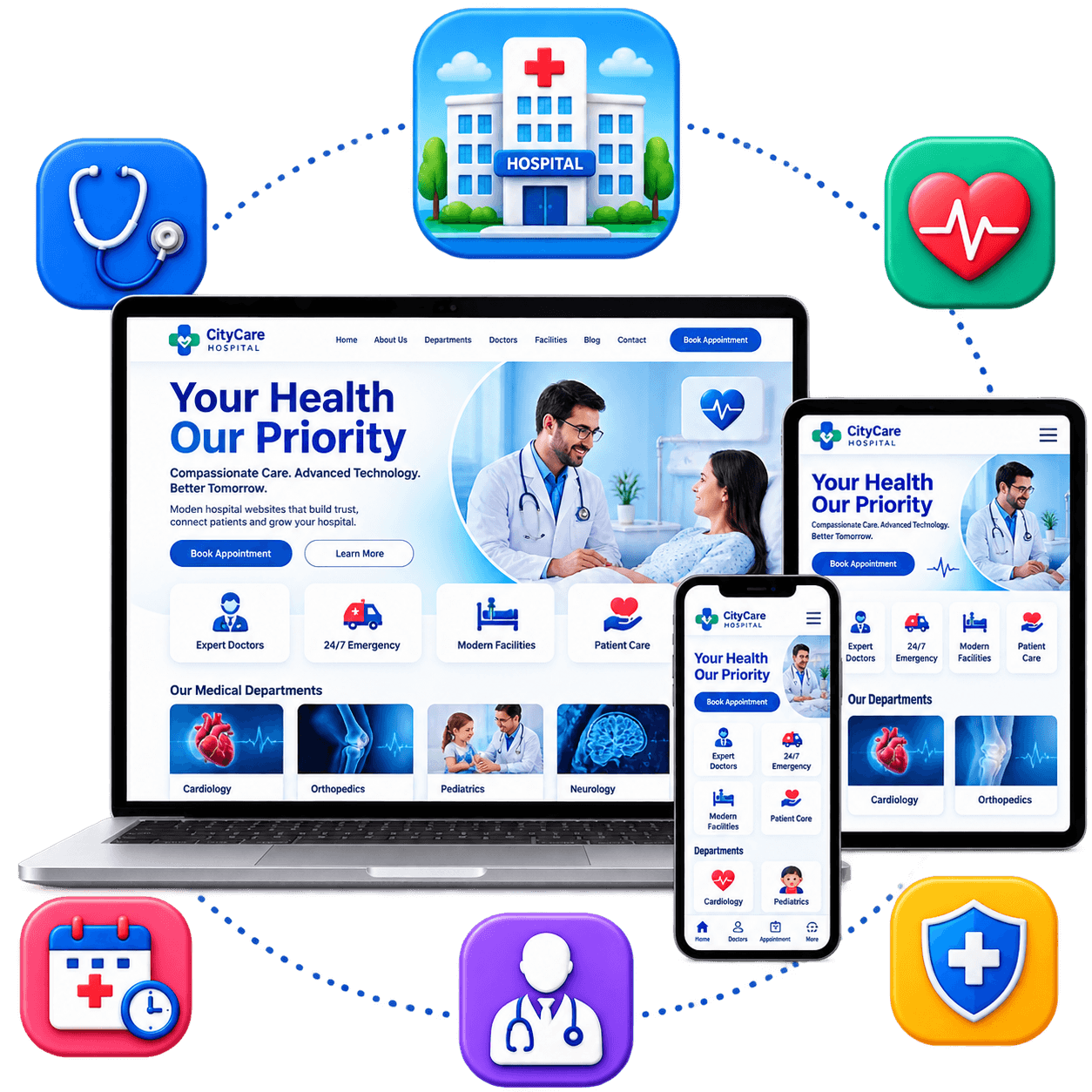
A hospital website is used differently from an ordinary company website. Someone may need an emergency number immediately, compare specialists for a planned consultation, check whether a treatment is available or confirm the correct branch before travelling. The page structure should respect that urgency and avoid making patients interpret internal hospital terminology.
We map content around common patient journeys while still serving referral partners, applicants and the wider community. Doctor profiles explain specialities and availability, department pages connect symptoms or services to the correct care area, and each location carries dependable contact and direction information.
The administration side is planned for authorised hospital teams who must keep doctors, schedules, notices and health content current. Forms collect only information needed for the agreed purpose, and any HIS, appointment or laboratory connection is assessed carefully before implementation.
The project combines patient-centred information, dependable publishing controls and suitable integrations for the institution’s workflow.
Present facilities, accreditations, visiting information, contacts, maps and emergency details for each location.
Organise specialists by department, expertise, location and approved availability information.
Create structured pages for specialities, procedures, technology and patient care services.
Build clear request forms or connect a supported appointment platform where appropriate access exists.
Keep critical numbers and location actions visible and usable, especially on mobile devices.
Provide controlled publishing access and purpose-specific forms with responsible validation and handling.
The website architecture can be adapted to different specialties, locations, patient journeys and operational systems.
Visitors can move from a health need to the relevant department, doctor, location and contact option.
Doctor search, directions, telephone actions and appointment forms remain practical on smaller screens.
Approved accreditation, infrastructure, medical expertise and outcome information appear with useful context.
Data collection is limited to the defined enquiry purpose with suitable consent and access considerations.
Doctor, specialty and location pages receive crawlable structure and relevant on-page search elements.
Authorised teams can maintain profiles and services without weakening the website’s design consistency.
We review audiences, locations, departments, appointments, content owners and applicable data requirements.
Doctors, care services and practical patient information are organised before responsive designs are approved.
CMS roles, forms and supported third-party connections are implemented alongside approved healthcare content.
Devices, links, forms, permissions and critical contacts are checked before staff handover and go-live.
Yes. Department, doctor and information pages can be structured to support Hindi or other regional languages alongside English, with content ownership and translation approval remaining with the hospital.
Cost depends on locations, doctor volume, department pages, appointment workflow, languages, CMS roles and integrations. We review the institution’s content and systems before providing a phased scope and quotation.
Yes. We can build an appointment request workflow or integrate a supported booking or HIS platform. Integration is confirmed only after reviewing provider documentation, security method and required data exchange.
Yes. Authorised roles can manage approved doctor, department, location, schedule and health-information content. Permissions are planned according to the hospital’s publishing and review process.
Potentially, if the existing system provides a secure API, embed or supported connection. We evaluate documentation, authentication, patient-data exposure and ownership responsibilities before defining the integration.
We minimise fields, use secure transmission, validation and access controls appropriate to the agreed form. The hospital must define its legal, clinical, retention and consent policies; sensitive medical records should not be collected through a general enquiry form.
Yes. Valid accreditation and certification information supplied and approved by the hospital can be presented clearly. The institution remains responsible for accuracy, current status and permitted use of marks or logos.
Yes. Support can include backups, updates, monitoring, technical issue resolution and planned enhancements. Content responsibility and response times are defined in the selected maintenance arrangement.