Restaurant and Menu Management
Items, variants, availability and preparation controls.
We develop connected customer, restaurant and delivery workflows where menus, preparation, assignment, tracking and payment states remain clear.
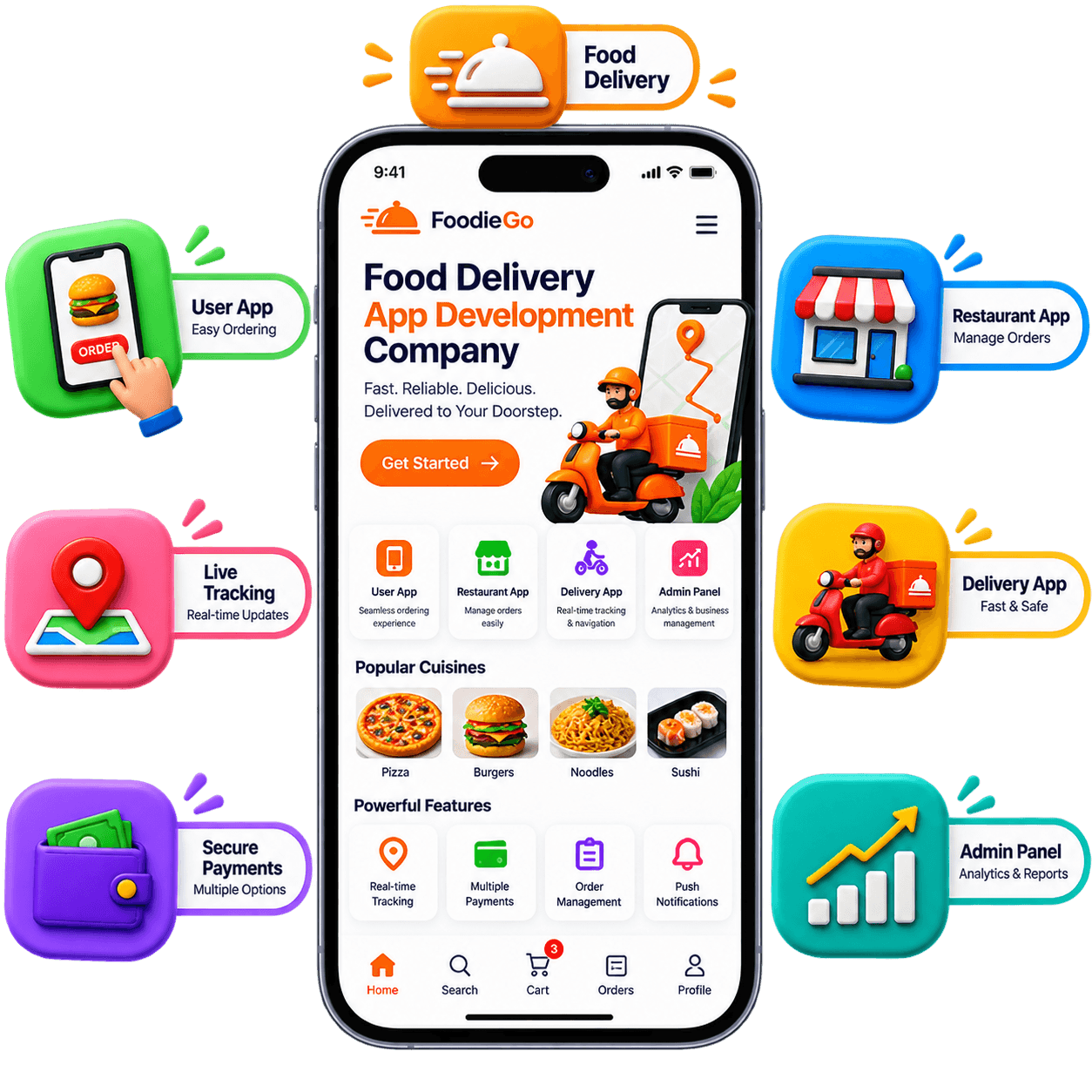
A customer sees one checkout, but the order must reach the kitchen, accept preparation timing and move to an available delivery partner. This holds whether you run a single restaurant, a chain, a cloud kitchen or a multi-restaurant marketplace.
Menus, service areas, availability, charges and cancellations need operational rules rather than static screens.
We map each status and exception so customers and staff receive accurate information throughout fulfilment.
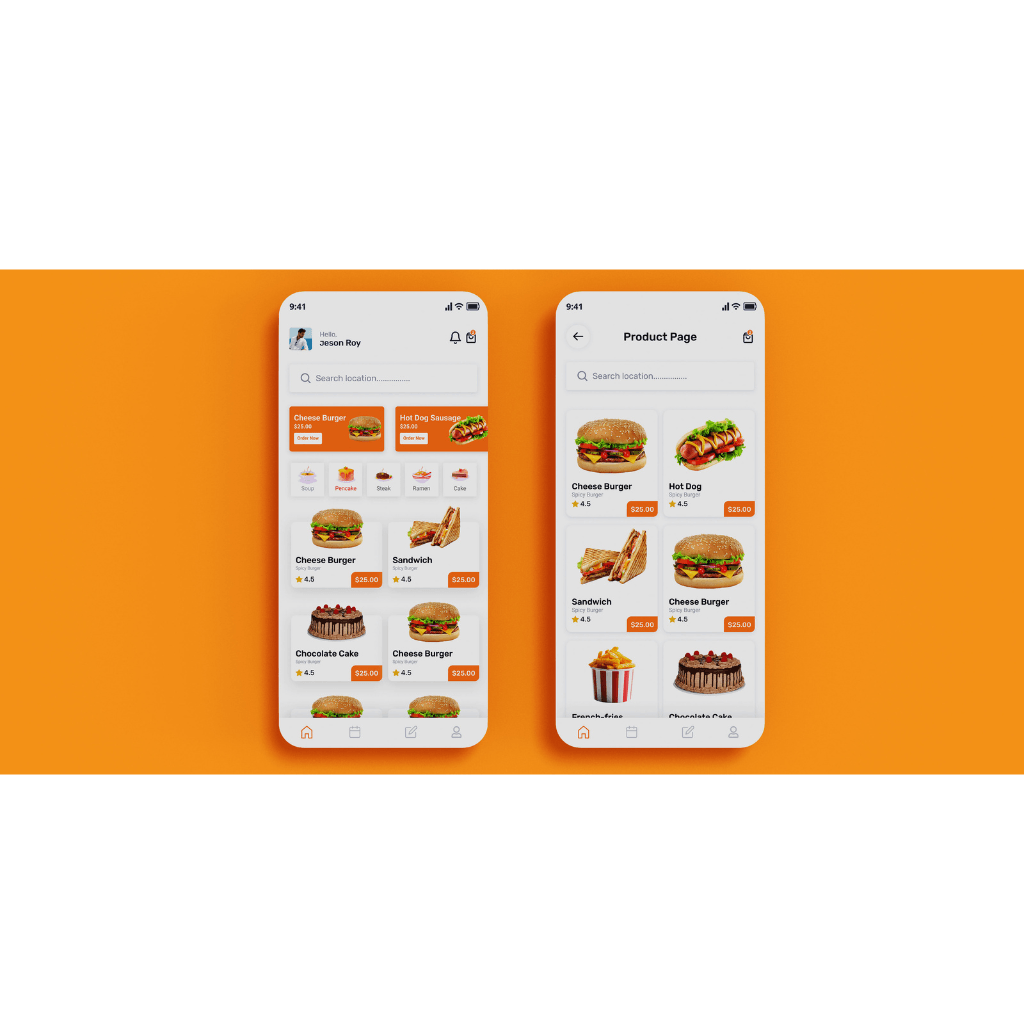
The scope connects customer experience, operational control and dependable technology instead of treating the app as a set of isolated screens.
Items, variants, availability and preparation controls.
Address, cart, offers and checkout journeys.
Assignment, navigation and delivery status actions.
Supported location and status visibility.
Customer transactions and operational records.
Service areas, disputes, users and reports.
For operations that can define responsibility across ordering, preparation and last-mile delivery.
Priority actions remain easy to understand across common Android and iOS screen sizes.
Network calls, media and data flows are planned for practical Indian mobile conditions.
Customer, staff and administrator permissions follow actual responsibilities.
Notifications are tied to meaningful status changes instead of unnecessary interruption.
Important journeys and business events can be measured with approved analytics tools.
The architecture can accommodate new modules and integrations as usage grows.
We document users, business rules, edge cases, integrations and measurable outcomes.
Key journeys, data structures, APIs and platform choices are agreed before full development.
Working modules are demonstrated and tested in stages against realistic scenarios.
Store preparation, production checks, monitoring and planned improvements follow.
Cost depends on user roles, screens, backend modules, integrations and testing effort. We provide a module-wise estimate after documenting the complete workflow.
Yes. We can recommend native or cross-platform development after considering features, performance, budget, device access and long-term maintenance.
Yes, when operations require it. Admin roles and controls are planned around the information and actions your authorised team must manage.
Yes. Multi-vendor menus, commissions, service areas, assignments and settlements require detailed operational scoping.
Yes. We build custom multi-restaurant ordering platforms with the same core flow — browsing, ordering, delivery assignment and tracking — designed around your own service areas, commissions and branding rather than a fixed clone script.
Potentially, when the existing system offers a secure and documented API or supported integration method. We verify access and data flow before confirming scope.
We minimise collected data, use secure transmission, validation and access controls, and follow agreed retention requirements. The product owner remains responsible for applicable legal and privacy policies.
Yes. Support can cover monitoring, compatibility updates, issue resolution, store releases and planned feature improvements.