Job Search and Filters
Candidates filter jobs by role, skill, location, salary range and experience, so they find relevant openings instead of scrolling through everything.
Running a job portal is not just about listing vacancies online. Candidates want fast search, employers want control over their job posts, and admins need a dashboard that keeps everything organised. That is exactly what we build - recruitment platforms that work for everyone using them, not just the person who commissioned the project.
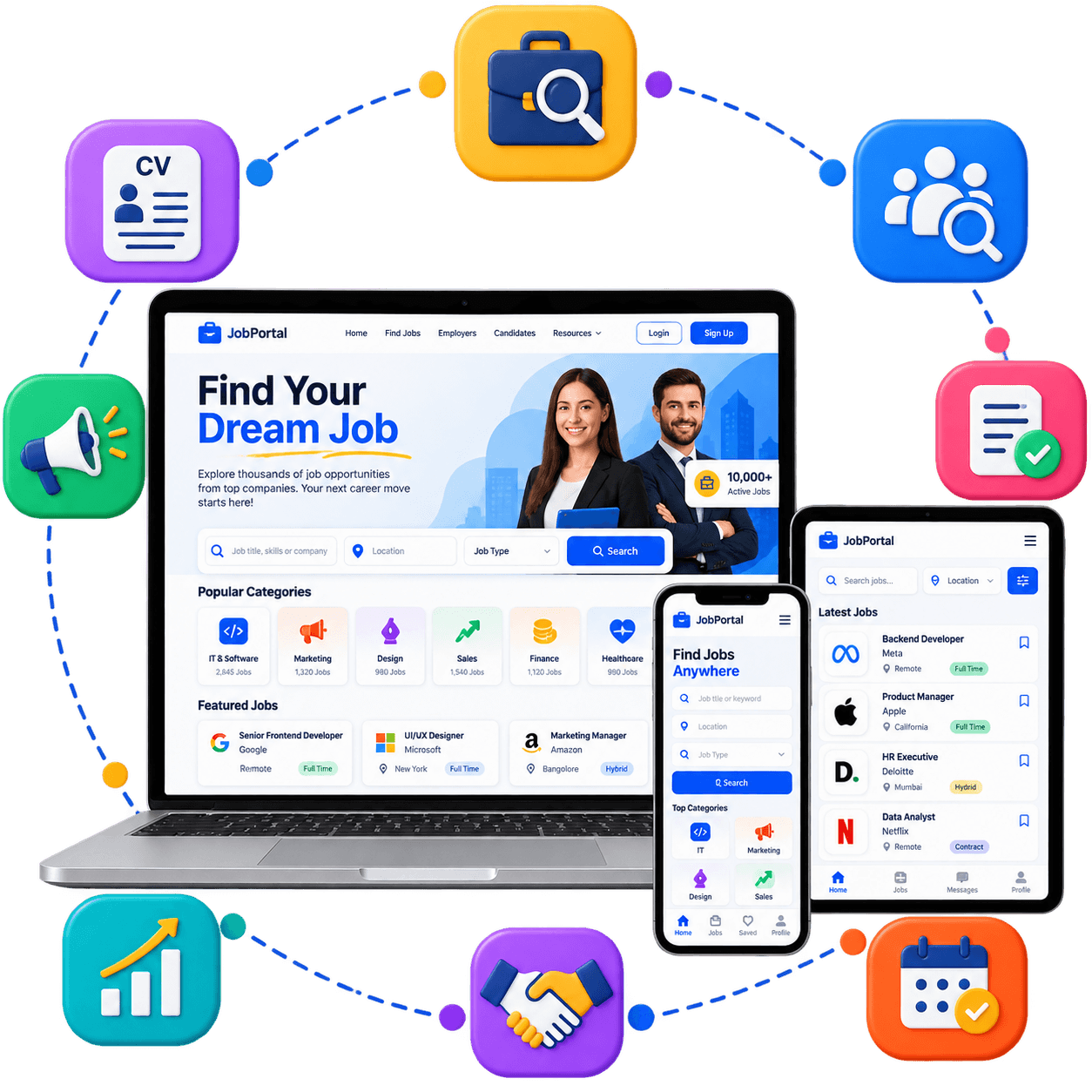
A job portal is not one product - it is three different experiences stitched together. Candidates search and apply. Employers post jobs and shortlist people. Admins keep the platform from turning into chaos. Get any one of these wrong and the portal stops working, no matter how good the design looks.
We build job portal websites in India with separate candidate, employer and admin roles from day one, not bolted on later. Job listings, applications, resumes and employer accounts stay connected through one database, so nothing gets duplicated or lost between panels.
Once the core hiring flow works, we add features that actually help - job alerts, subscription plans for employers, skill assessments, or integration with an existing ATS. We do not push extra modules just to pad the scope of the project.
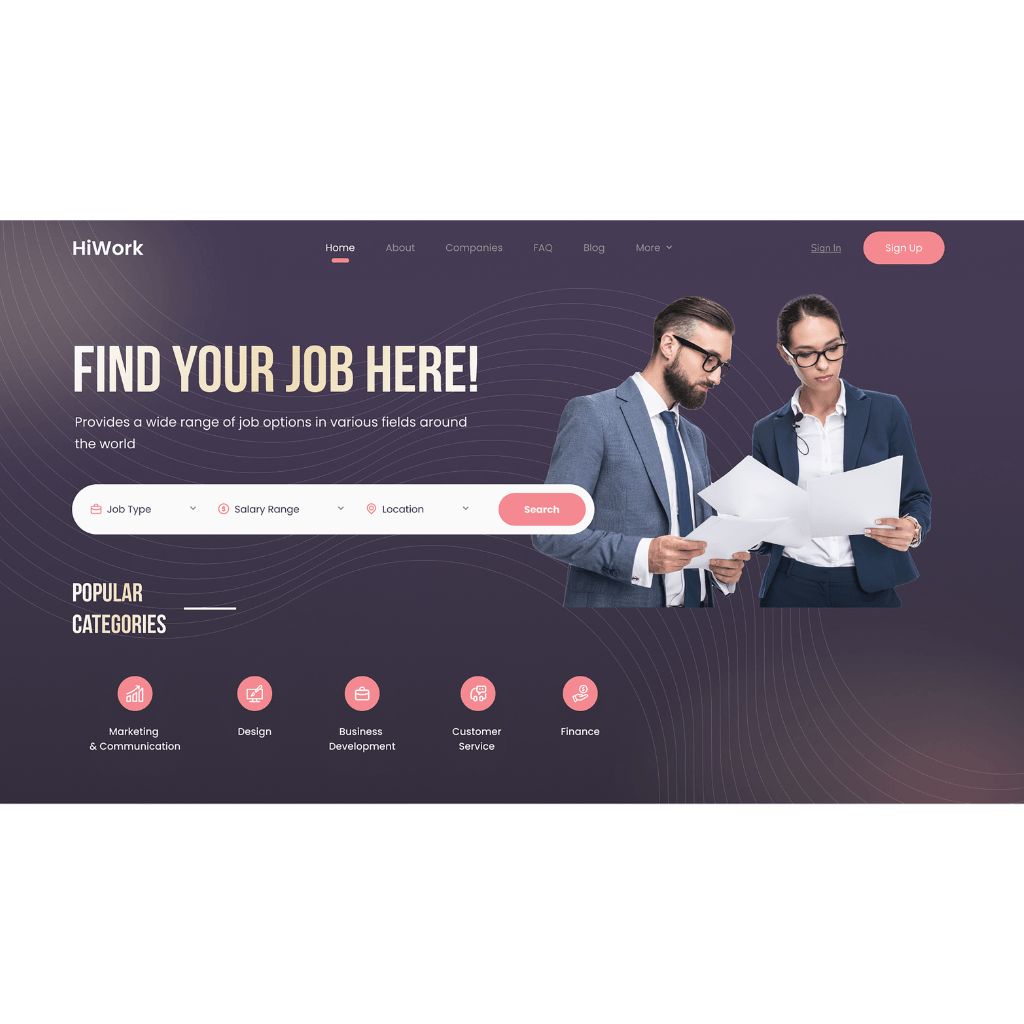
Features are chosen around your recruitment model and user roles, not picked from a fixed package.
Candidates filter jobs by role, skill, location, salary range and experience, so they find relevant openings instead of scrolling through everything.
Profile, resume upload, saved jobs and an application tracker that shows exactly where each application stands.
Company profile, job posting and an applicant list employers can filter and shortlist without emailing back and forth.
Approve job posts, manage users and pull reports on how the platform is actually being used.
Job alerts based on saved searches, plus application status updates so candidates are not left wondering.
Payment gateways for job posting plans, assessment tools or an existing ATS, added only where it fits your workflow.
The portal is adapted to your audience, hiring volume and revenue model - a campus placement site does not need what a staffing agency needs.
Structured job data means candidates see openings that actually match their profile, not everything in the database.
Candidates can search and apply from a phone just as easily as a desktop.
Status and next steps stay visible, so nobody has to ask "did you get my application?"
Role-based permissions keep employer tools and candidate data separate and protected.
Platform activity, job performance and application trends can be tracked from the admin dashboard.
New job categories, locations or entire modules can be added without rebuilding the platform.
We map out roles, job data fields and every stage an application goes through.
Candidate and employer journeys are designed separately, because they need different things from the same platform.
Dashboards, search and notifications are built and tested against real hiring scenarios, not just sample data.
Permissions and workflows are verified before go-live, with support available after launch.
Cost depends on the number of roles, search complexity, payment integration and how many dashboards you need. A basic job listing site with candidate and employer login costs far less than a full portal with subscriptions, resume parsing and admin analytics. We quote only after understanding your hiring model, not off a fixed price list.
A straightforward candidate-employer job board usually takes six to eight weeks. Add resume parsing, payment plans or ATS integration, and the timeline extends. We share a realistic estimate once the scope is finalised.
Yes, with approval workflows, posting limits and permission controls set up the way you need them.
Yes - candidates can upload resumes in standard formats, update them anytime and control what employers can see.
Not a full clone on day one, but yes - you can start with core features such as job posting, search and applications, then add more as the platform grows. Most successful job portals in India started smaller than people expect.
We typically build on PHP and MySQL. What matters more than the framework is how the database is structured for fast search and reliable reporting as job listings grow into the thousands.
Yes, payment gateways and subscription plans can be built in for featured listings or premium employer accounts.
Yes, alerts can run on saved search preferences using email, SMS or WhatsApp, depending on what you want to support.
Often, yes, when the ATS offers a documented and secure integration option. We review this during discovery before committing to it.
Data collection, storage and access are scoped carefully during development, but the platform owner is responsible for defining and publishing the applicable privacy policy.