Structured Listings
Consistent fields across categories so listings can actually be compared side by side, not just displayed as free text.
We build searchable directory websites where visitors can compare listings quickly, owners can maintain accurate profiles, and administrators can control quality as the platform grows.
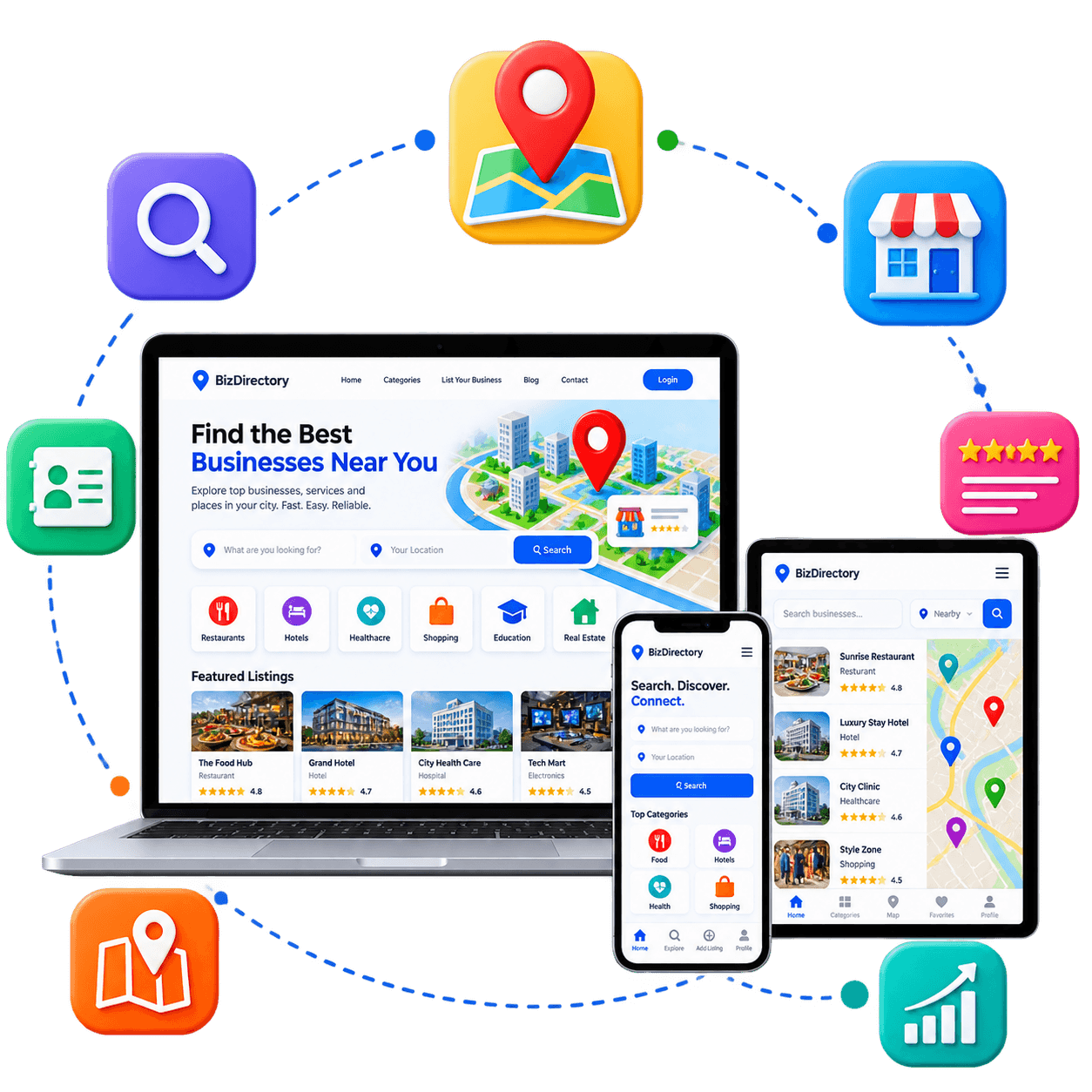
A directory works when users can reach the listing they want in a few clicks, not when it just accumulates pages. Categories, filters, location structure and the fields shown for each listing are planned around how people actually search, not added just because a competitor has them.
Listing owners typically need to submit, claim and update their own profiles, while administrators need to approve, spot duplicates and moderate quality. We map these two roles separately before writing any code, so neither side gets in the other's way.
The same platform can support free, featured and paid listings without slowing down public search or making the admin panel harder to manage as the number of listings grows into the thousands.

Discovery, listing ownership and administration are built as connected workflows, not separate add-ons.
Consistent fields across categories so listings can actually be compared side by side, not just displayed as free text.
Category, location and attribute filters that narrow results in a couple of clicks instead of endless scrolling.
A panel where listing owners can submit, claim, edit and respond to enquiries without contacting an admin every time.
Approval queues, duplicate detection and reporting tools that keep listing quality up as volume grows.
Maps and a city or area structure that can scale from one region to nationwide coverage.
Featured listings, paid plans or advertising slots scoped once your commercial model is decided.
The data model and workflows are adapted to your niche and to what actually makes a listing useful to your users.
Users narrow results by category, location and attribute without digging through irrelevant listings.
Structured fields make thousands of listings easier to manage than free-text entries ever could be.
Search, filtering and enquiry actions work smoothly on the phone screens most visitors will actually use.
Admin workflows catch duplicate or inaccurate listings before they go live, not months after users complain.
Search activity and enquiry events are tracked, so you know which categories and cities are actually working.
New locations and listing types can be added later without restructuring what is already live.
We define listing types, fields, user roles and the revenue model before any design work starts.
Submission, discovery and listing-detail journeys are planned around real user behaviour.
Dashboards, moderation tools and agreed integrations are built and connected.
Listings, permissions, search and forms are tested with real data before going live.
The right fit depends on your niche, the scale you are planning for and your budget. We are happy to walk you through directory platforms we have built in similar categories so you can judge our work directly.
We do not copy those platforms, but we can build a directory with the same core idea — search, categories, listings and enquiries — scaled to your niche and budget rather than a full national platform.
Cost depends on listing types, filters, dashboards, moderation, payments and integrations. We give an estimate once the platform workflows are defined.
Yes. Submissions can go through a review step before publishing, with role and edit controls suited to your directory.
Yes, payment and plan workflows can be added once the commercial rules are documented.
Usually yes. We first check the format, completeness, duplicates and usage rights before migrating.
Public listing pages use crawlable URLs, structured metadata and schema markup, subject to the listing content itself being unique and useful.
Yes. Location hierarchy and city landing pages can be designed for regional coverage or a full nationwide rollout.
Yes. Maintenance and feature improvements can continue as your listing base and requirements grow.