Enterprise Information Architecture
We organise divisions, offerings, sectors and corporate information into navigation that works for external audiences.
Customers, investors, job applicants and the media all land on the same corporate website — often looking for completely different things. We build the kind of site that handles that without turning into a maze: clear sections for each audience, one consistent brand voice, and a CMS your team can actually maintain.
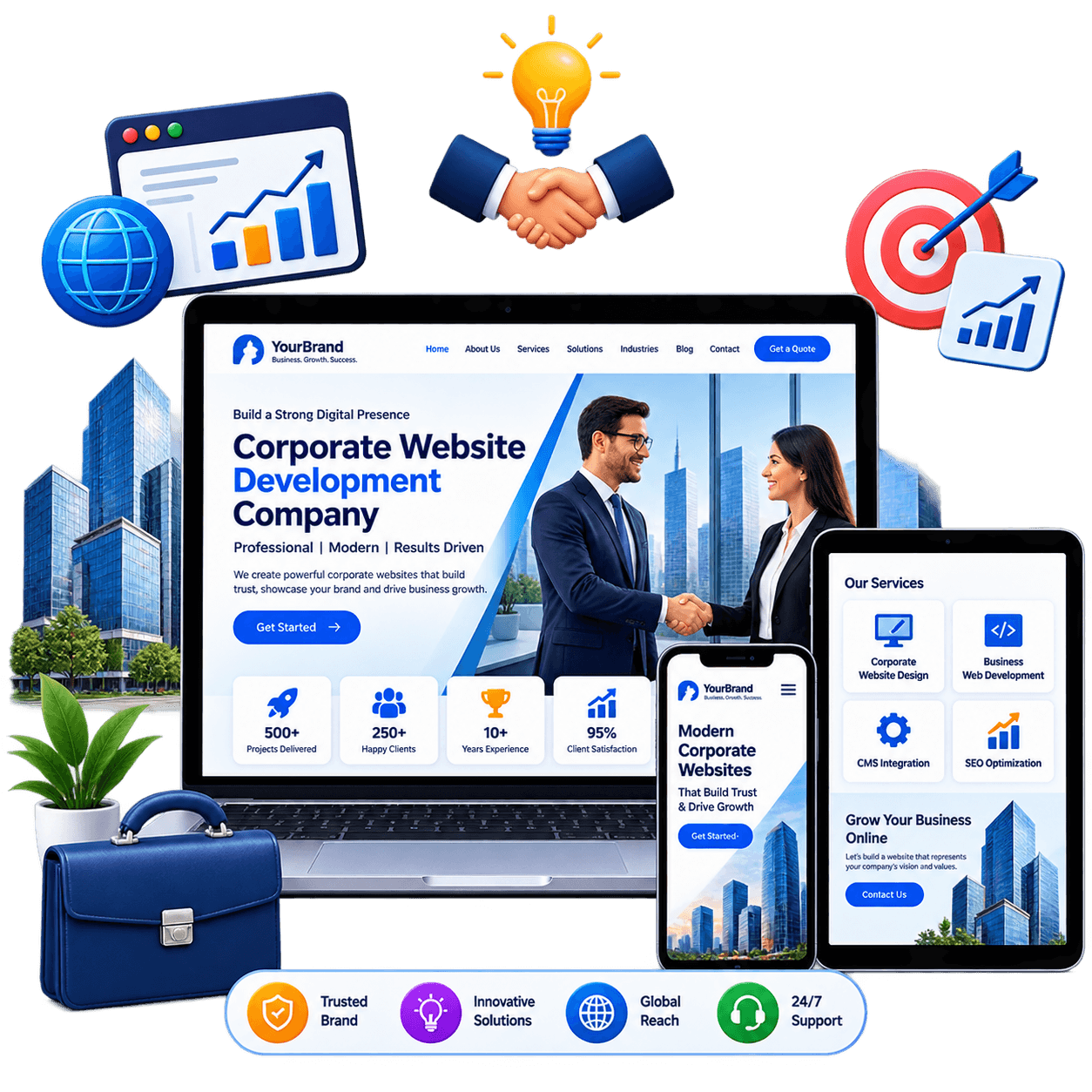
A corporate website is often reviewed before a major business conversation begins. A procurement team may verify capabilities, a candidate may study company culture, a partner may look for group information, and a journalist may need an official announcement. Each visitor arrives with a different question, yet every page must feel as though it belongs to the same organisation.
We begin with information architecture rather than visual decoration. Business units, industries, locations, leadership, policies, careers and news are organised according to how people look for them. This keeps a large volume of information usable and prevents the navigation from becoming a record of the company’s internal hierarchy.
Design and technology then support that structure. Brand rules remain consistent, authorised teams can manage changing information, and high-value pages receive the performance and search foundations they need. The outcome is a corporate platform that can represent the organisation today and absorb new divisions, markets and responsibilities later.
The project combines stakeholder planning, brand governance and dependable technology for a website that will be used across departments.
We organise divisions, offerings, sectors and corporate information into navigation that works for external audiences.
Leadership, history, values, policies and milestones are presented with the clarity expected from an established organisation.
Subsidiaries, brands, plants or regional operations can sit within one coherent digital system.
Publish announcements, press coverage, reports and approved downloads in an orderly, searchable format.
Department-based roles help authorised users maintain content without exposing sensitive administration controls.
Scalable metadata, internal linking, structured pages and technical checks support discoverability across a growing site.
A corporate build is appropriate when the website must represent organisational depth, serve several stakeholders and maintain standards across substantial content.
Clients, partners, applicants and media contacts can reach relevant information without navigating internal complexity.
Reusable layouts and defined visual rules keep new sections aligned with the corporate identity.
Access, forms, data handling, updates and deployment are planned with corporate risk in mind.
Complex navigation, reports, profiles and content remain usable across mobile and desktop devices.
The architecture can support regional operations, additional languages and market-specific information when required.
New divisions, leadership changes and corporate announcements can be added without weakening the overall experience.
We identify audiences, content owners, approval responsibilities, technical needs and measurable project priorities.
The sitemap, navigation and page systems are planned before key screens establish the design direction.
Templates, CMS controls and integrations are built while approved content is prepared and moved carefully.
We complete device, form, SEO and permission checks, support stakeholder review and coordinate production release.
A regular business website usually promotes one offering to one type of visitor. A corporate website serves several audiences at once — investors, job applicants, media, procurement teams, group companies — so it needs deeper information architecture, role-based content management and governance that a standard business site doesn't require.
Look past the portfolio and ask about their process for stakeholder alignment, content governance and post-launch CMS training, since those decide whether the website stays consistent after handover. Ask for a documented scope with milestones, and confirm who owns technical SEO and content migration during the project.
Cost depends on page systems, content volume, CMS roles, languages, integrations and migration requirements. We first map the organisation and approval process, then provide a phased scope and commercial estimate rather than pricing only by page count.
A corporate website commonly requires several weeks to a few months. The schedule is influenced by stakeholder approvals, content readiness, data migration, custom modules and integrations. We define milestones and responsibilities before work begins.
Yes. We can design a shared corporate framework with distinct areas for group companies, divisions, sectors or locations while retaining consistent navigation and brand governance.
Yes. A suitable CMS can provide role-based access so authorised teams manage specific sections while administrators retain overall control. The exact permissions are planned during requirement discovery.
Yes. We can audit existing URLs and content, identify what should be retained or consolidated, prepare redirects and migrate approved material. This is planned carefully to reduce broken links and avoid unnecessary SEO loss.
Yes, when multilingual publishing is part of the scope. We structure language versions, navigation, metadata and editorial controls appropriately; translation content can be supplied by your team or coordinated separately.
We build with secure development practices, controlled access, validation, SSL and performance optimisation. If your organisation has a specific security policy, audit checklist or hosting standard, we review it during scoping and document what the project will cover.